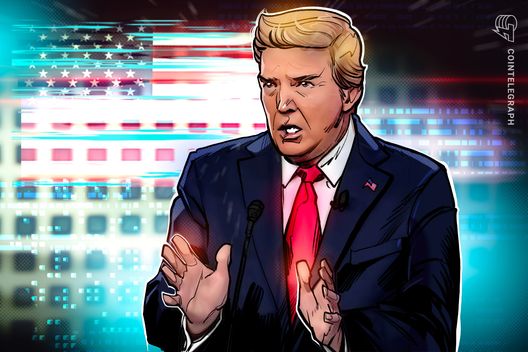
The cryptocurrency sector remained largely unaffected as President Donald Trump raised the baseline global tariff rate to 15%, signaling that digital asset markets may be developing resilience to traditional macroeconomic pressures that typically impact risk assets.
Market Response Indicates Growing Independence
Bitcoin and major cryptocurrencies showed minimal volatility following the tariff announcement, suggesting the digital asset sector is maturing in its response to geopolitical economic policy shifts. This stability contrasts with previous market cycles where regulatory or policy announcements triggered significant price swings.
For blockchain professionals, this market behavior reflects the industry's evolution from a purely speculative asset class to a more established sector with institutional participation. The muted response to tariff increases may indicate that crypto markets are increasingly decoupling from traditional financial markets during policy-driven events.
The administration's use of alternative legal mechanisms to implement tariffs has drawn criticism from legal experts who question the scope of presidential authority in this area. However, the crypto sector's relative insulation from these trade policy changes demonstrates how blockchain-based assets operate across different economic frameworks than traditional markets.
Workforce Implications
The crypto industry's resilience during macroeconomic uncertainty strengthens the case for career stability in the sector. Companies building blockchain infrastructure, decentralized finance protocols, and digital asset services continue operating independently of tariff-related trade disruptions.
This independence from traditional trade policy creates distinct advantages for web3 professionals, particularly those in roles focused on global operations, cross-border payments, and decentralized systems. Organizations in the space can maintain hiring momentum and project timelines without the supply chain disruptions affecting traditional industries.
For job seekers in the blockchain space, the sector's performance during policy uncertainty demonstrates the fundamental value proposition of decentralized networks. Professionals with expertise in building resilient, borderless financial infrastructure remain in demand as institutions recognize crypto's potential as a hedge against traditional market volatility.
The continued stability positions the crypto job market favorably for both employers seeking top talent and professionals looking to enter or advance in the industry during a period of broader economic uncertainty.