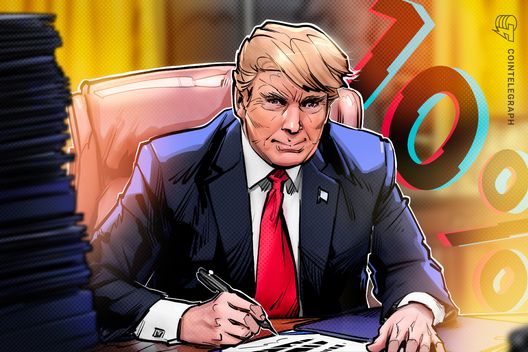
The Trump administration moved forward with a 10% baseline tariff on global imports following a Supreme Court decision that restricted the president's ability to impose tariffs under national emergency powers during peacetime. The ruling and subsequent policy shift introduce new economic uncertainties for the crypto and blockchain sector, which operates in an increasingly globalized market.
Supreme Court Decision Reshapes Trade Policy
The Supreme Court ruled Friday that President Trump cannot invoke national emergency powers to levy tariffs during peacetime, marking a significant constraint on executive trade authority. Rather than scaling back tariff plans, the administration pivoted to implementing a 10% global baseline tariff through alternative legal mechanisms.
This development adds to the economic policy volatility that has characterized recent months, affecting businesses across sectors including blockchain and cryptocurrency companies with international operations or supply chains.
Implications for Crypto and Blockchain Companies
The tariff policy carries potential consequences for the web3 industry in several areas:
- Hardware costs: Companies developing mining equipment, blockchain infrastructure, or crypto hardware wallets may face increased component costs
- Cross-border operations: Blockchain firms with distributed teams and international offices could see operational expenses rise
- Investment climate: Economic uncertainty typically affects venture capital deployment and hiring budgets across the tech sector
The crypto industry has already navigated significant regulatory uncertainty in recent years. Additional economic headwinds from trade policy could influence company expansion plans and workforce growth, particularly for startups operating with limited runway.
Outlook for Web3 Workforce
For blockchain professionals, this policy shift reinforces the importance of monitoring macroeconomic factors alongside crypto-specific developments. Companies may adjust hiring timelines or modify compensation packages in response to broader economic conditions.
Organizations with lean operational structures and digital-first business models may prove more resilient to trade disruptions than traditional industries. However, any firms relying on international hardware supply chains or serving global markets should prepare for potential cost increases that could affect budgets and headcount planning in the coming quarters.
The situation remains fluid as legal challenges and policy adjustments continue to unfold.



