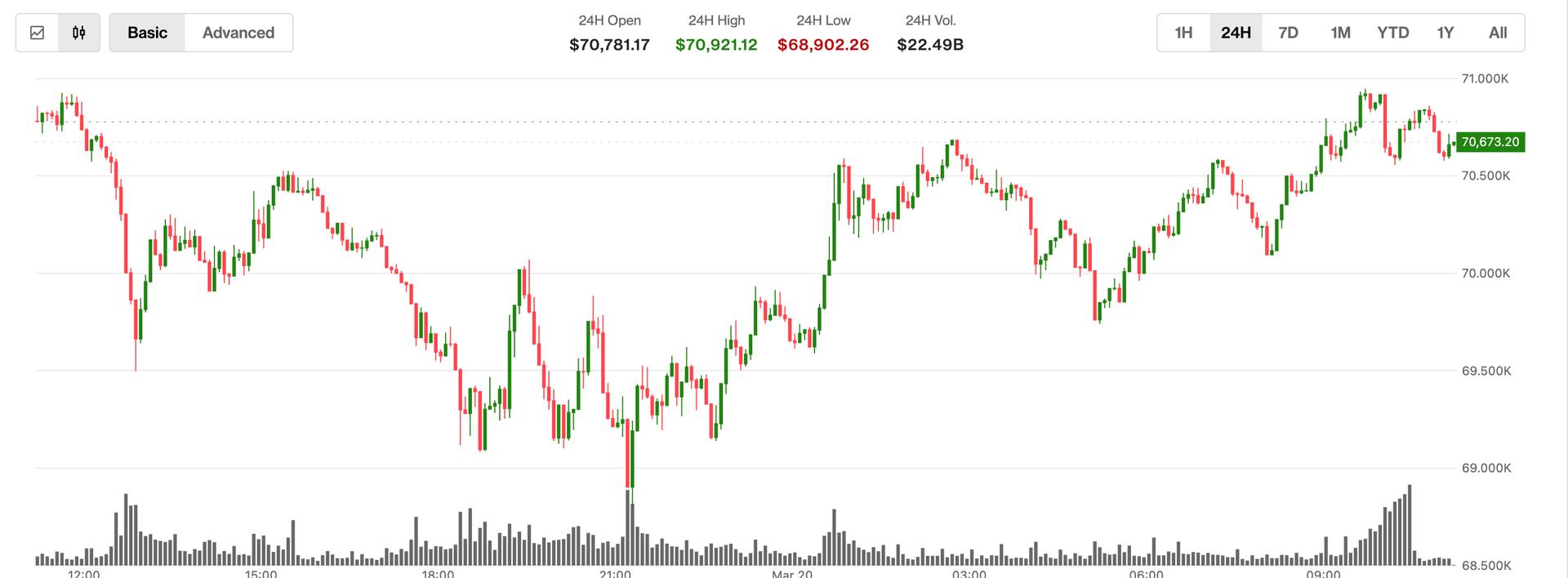
Bitcoin climbed to $70,800 as oil prices retreated, marking a significant price movement that reflects broader macroeconomic shifts affecting the digital asset sector. The rally comes as ether and XRP underperformed, highlighting divergent trends across major cryptocurrencies that may influence hiring priorities and skill demands across blockchain companies.
Market Performance and Sector Implications
The cryptocurrency market's response to traditional financial indicators continues to demonstrate its maturation as an asset class. Bitcoin's surge coincided with declining oil prices, suggesting that investors are rotating capital between energy commodities and digital assets during periods of macroeconomic uncertainty.
This price action has implications for professionals in the crypto space, particularly those in trading operations, risk management, and market analysis roles. Companies building infrastructure around Bitcoin trading and custody services may accelerate hiring as increased price volatility typically drives higher trading volumes and institutional interest.
The underperformance of ether and XRP relative to Bitcoin indicates a flight to the most established digital asset, which could affect staffing decisions at projects focused on alternative layer-1 blockchains and enterprise payment solutions. Organizations in these ecosystems may need to adjust their talent acquisition strategies or pivot resources toward Bitcoin-related development.
Workforce Considerations
For blockchain professionals, these market dynamics underscore the importance of maintaining diverse skill sets across multiple protocols and ecosystems. Developers, analysts, and operations specialists who can work across Bitcoin, Ethereum, and other major platforms position themselves more competitively in a market where capital flows shift rapidly.
Financial institutions and crypto-native companies focused on derivatives, options, and structured products typically expand their teams during periods of elevated Bitcoin activity. Professionals with backgrounds in traditional finance combined with cryptocurrency expertise remain particularly valuable during these market conditions.
The current price movement reinforces the ongoing demand for risk management professionals, compliance specialists, and market makers who can navigate volatile conditions while maintaining regulatory standards. As institutional participation grows, companies require talent capable of bridging traditional finance practices with emerging digital asset frameworks.



